The Right to Health Sovereignty: Policy Report
Examining Global Health Architecture, Pandemic Preparedness, and Pathways for Evidence-Based Reform
Overview
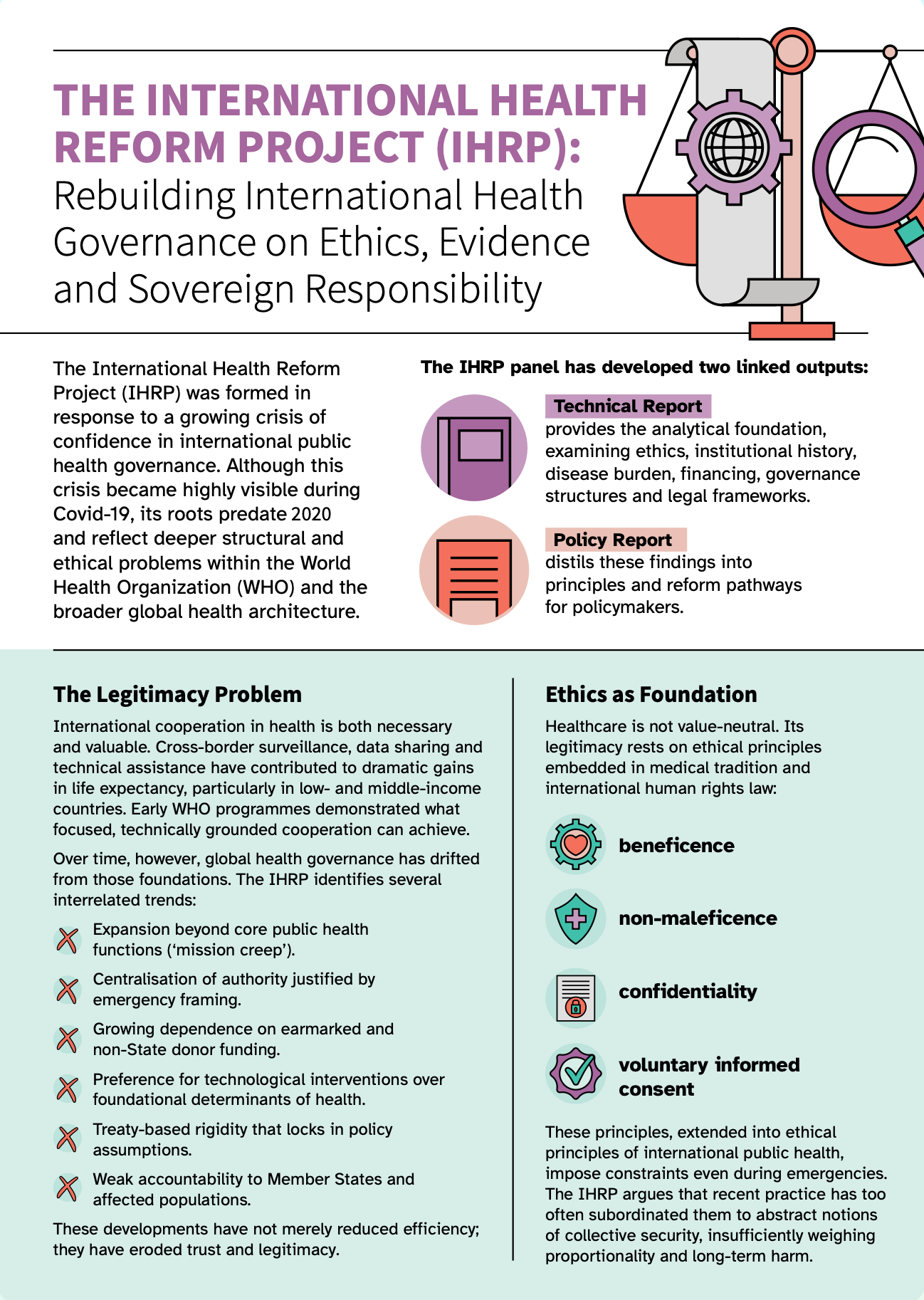
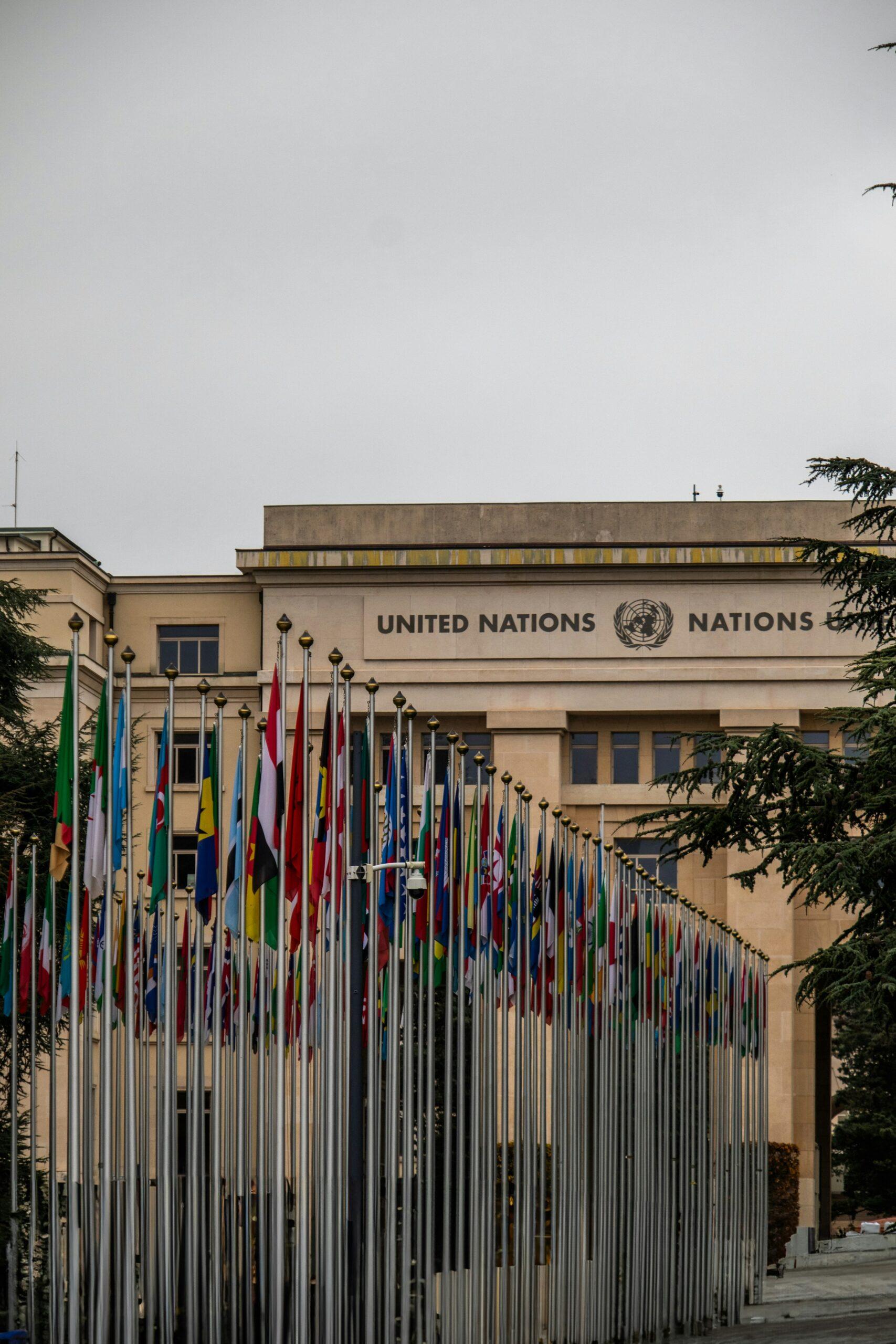
This document presents a comprehensive examination of global health governance structures, focusing on the World Health Organization (WHO) and international health regulations. It critically analyzes recent developments in pandemic preparedness frameworks, including the 2024 amendments to the International Health Regulations (IHR) and proposed pandemic treaty negotiations. The analysis highlights concerns about institutional overreach, lack of transparency, conflicts of interest, and misalignment between global health priorities and actual disease burdens, particularly in low- and middle-income countries.
The document advocates for evidence-based reform centered on subsidiarity, sovereignty, and accountability. It argues for decentralized health governance that respects national sovereignty while strengthening local health systems. Key reform proposals include transparent decision-making processes, addressing conflicts of interest in global health institutions, realigning priorities with actual health needs, and ensuring that international health frameworks support rather than supersede national authorities. The analysis draws on historical examples, international law principles, and recent geopolitical developments to make the case for fundamental restructuring of global health governance.
Key Findings
- Recent amendments to the International Health Regulations (IHR) and proposed pandemic treaty frameworks demonstrate a trend toward centralization of health authority that may conflict with principles of national sovereignty and subsidiarity
- There is significant misalignment between global health priorities and actual disease burdens, with disproportionate focus on pandemic preparedness relative to endemic diseases that cause far greater mortality in low- and middle-income countries
- Conflicts of interest within global health institutions, including substantial private sector funding and influence, raise concerns about the independence and objectivity of health policy recommendations
- The response to COVID-19 revealed significant problems with centralized, one-size-fits-all approaches to health emergencies, including limited consideration of costs, trade-offs, and local contexts
- Several countries, including the United States and Italy, have rejected certain WHO amendments, signaling growing concerns about global health governance frameworks among sovereign nations
- Historical examples of successful health interventions, such as smallpox eradication, were achieved through cooperative frameworks that respected national sovereignty rather than supranational mandates
- International law principles, including those established through the UN Charter, Universal Declaration of Human Rights, and various human rights covenants, support the primacy of national sovereignty and democratic accountability in health governance
Recommendations
Adopt subsidiarity as a core principle in global health governance, ensuring decisions are made at the most local level practicable and international bodies serve supportive rather than directive roles
Reform WHO governance structures to enhance transparency, address conflicts of interest, and ensure funding mechanisms do not compromise institutional independence or policy objectivity
Realign global health priorities to reflect actual disease burdens and health needs, particularly in low- and middle-income countries, rather than disproportionately focusing on rare pandemic events
Strengthen national and local health systems capacity as the primary strategy for health security, rather than relying on centralized international frameworks and mandates
Ensure all international health agreements and regulations explicitly respect national sovereignty and constitutional democratic processes, with clear provisions for non-participation without penalty
Establish rigorous cost-benefit analysis and consideration of trade-offs as mandatory components of international health recommendations, acknowledging that health interventions have economic, social, and human rights implications
Create mechanisms for genuine multi-stakeholder participation in global health governance that includes civil society, affected communities, and independent experts free from conflicts of interest