
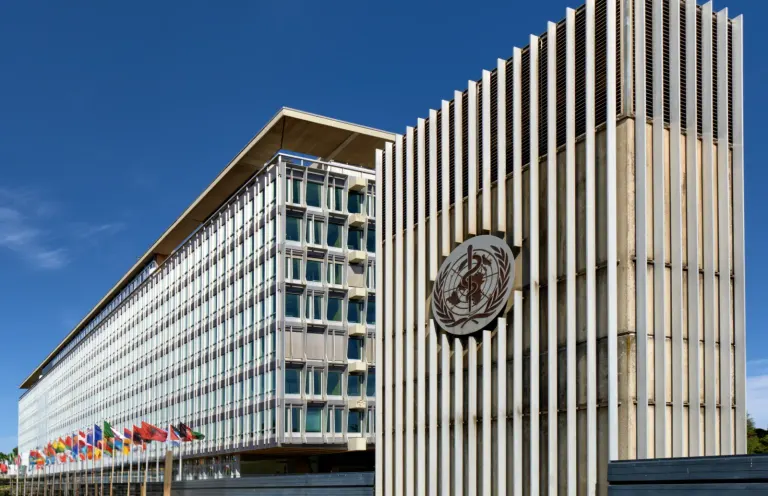
Why Reform Matters Now
The exit of the United States and the pending election of a new WHO Director-General in July 2027 presents a critical moment for institutional reassessment.
Healthcare legitimacy rests on ethical principles: beneficence, non-maleficence, confidentiality, and voluntary informed consent— even during emergencies.
States bear primary responsibility for protecting their populations' health. International organisations exist to support states — not replace or override them.
Proportionality must guide future investment. Pandemics account for a small share of global mortality compared with endemic diseases.
Research Projects
Structured around governance, accountability, and institutional design — with WHO reform as the inaugural programme.





The Legitimacy Problem
International cooperation in health is both necessary and valuable. However, global health governance has drifted from its foundations. The IHRP identifies several interrelated trends:
- Expansion beyond core public health functions ('mission creep').
- Centralisation of authority justified by emergency framing.
- Growing dependence on earmarked and non-State donor funding.
- Preference for technological interventions over foundational determinants of health.
- Treaty-based rigidity that locks in policy assumptions.
- Weak accountability to Member States and affected populations.
Core Ethical Principles
These principles impose constraints even during emergencies. Recent practice has too often subordinated them to abstract notions of collective security.
Beneficence
The duty to act for the good of the patient and community.
Non-maleficence
First, do no harm — the obligation to avoid preventable injury or suffering.
Confidentiality
Respect for privacy as the foundation of trust in medical relationships.
Voluntary Informed Consent
Recognition of individual autonomy and voluntary decision-making.

Principles for Institutional Reform
The Policy Report proposes principles for reforming the WHO— or, if necessary, establishing a successor International Health Organization (IHO).
- 1
Decentralised authority.
- 2
Proportionate emergency policy focus within a more people-centred public health approach.
- 3
Financial independence through assessed contributions.
- 4
Strict conflict-of-interest rules.
- 5
Limited, clearly defined mandates.
- 6
Time-bound interventions that build national capacity.
- 7
Success measured by redundancy, not expansion.