
Pandemic Powers Without a Pandemic Autopsy
Anthony Fauci's pandemic diary and private communications reveal significant early uncertainty among top scientists about COVID-19's origins, yet their public statements soon conveyed far greater certainty while downplaying laboratory hypotheses. The discrepancy raises questions about transparency and institutional interests that should inform current debates over expanding pandemic powers through the WHO Pandemic Agreement.
Abstract
Fauci's testimony and leaked pandemic files reveal scientists' private COVID-origin doubts contrasted with public certainty, exposing informal influence without accountability—a warning for the WHO Pandemic Agreement's weak oversight.
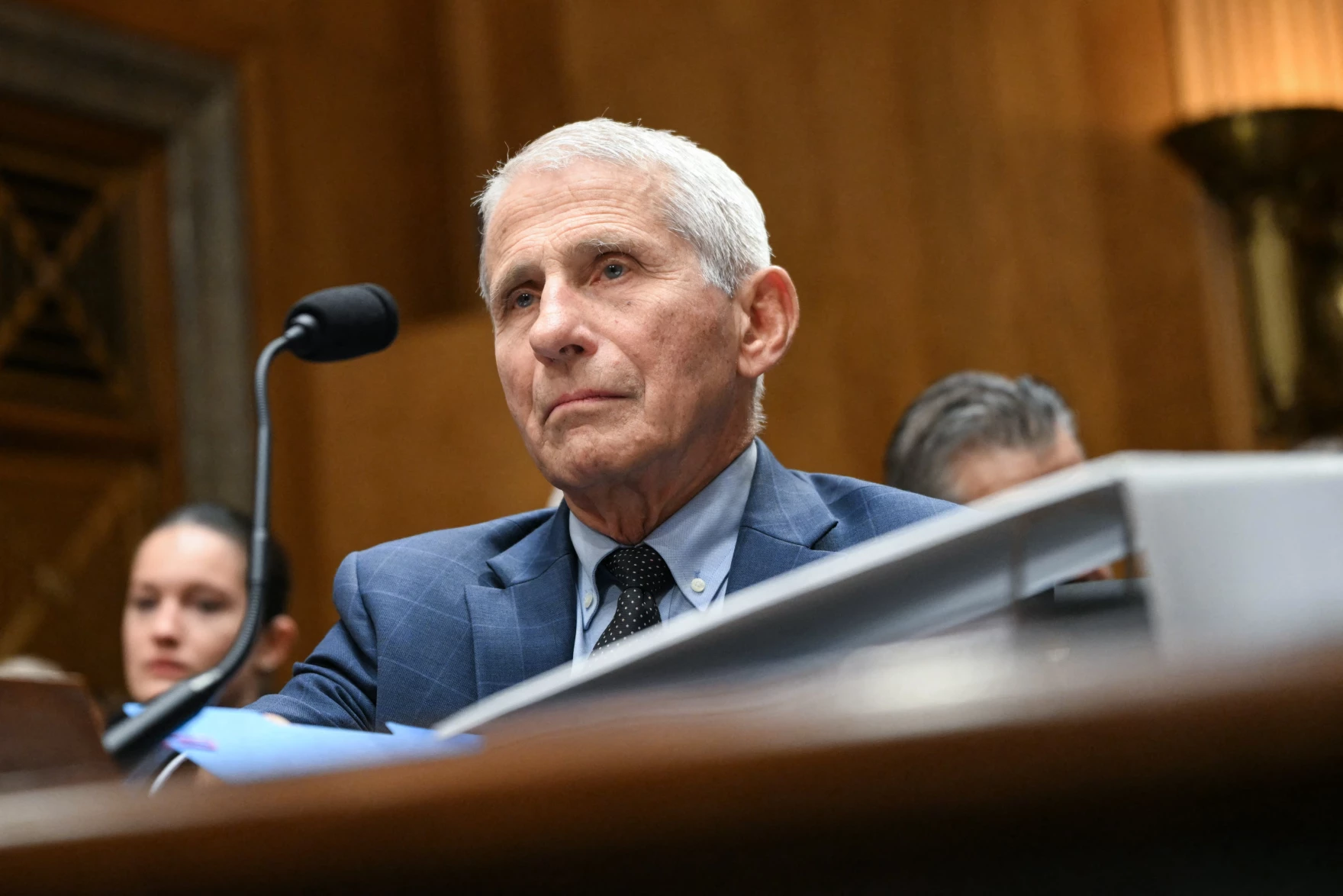
Fauci Testifies Before Senate
Anthony Fauci is testifying today before the Senate Homeland Security and Governmental Affairs Committee. The hearing follows the release of his pandemic diary and private communications among the authors of The Proximal Origin of SARS-CoV-2.
It offers an opportunity to revisit a question that should never have been closed: how much uncertainty did influential scientists and officials privately recognize about COVID-19's origin, and how honestly did they communicate it?
Scientific Uncertainty About Origins
The documents do not prove that SARS-CoV-2 was engineered or escaped from a laboratory. Natural zoonotic emergence remains possible, and later research has linked the earliest recognized cases to Wuhan's Huanan wet market.
But the records show that prominent scientists initially took a research-related origin seriously and continued discussing laboratory mechanisms after Proximal Origin was published.
Private Doubts, Public Certainty
In February 2020, Fauci, NIH Director Francis Collins, Wellcome Trust Director Jeremy Farrar and leading virologists discussed unusual features of the virus, deliberate insertion and accidental release.
Yet the public account soon became much more certain. The Lancet condemned suggestions of a non-natural origin as conspiracy theories, while Proximal Origin was widely presented as independently excluding laboratory involvement.
The Problem of Transparency
The concern is not that scientists considered competing hypotheses or changed their minds. That is how science should operate.
The problem is that the public was not told enough about the earlier uncertainty, officials' involvement in developing the published analysis, or the institutional interests surrounding research funded through the National Institutes of Health and EcoHealth Alliance at the Wuhan Institute of Virology.
Today's hearing should therefore establish a documentary chronology rather than become another partisan confrontation.
Informal Influence Without Formal Power
The documents also demonstrate how scientific influence can operate without formal responsibility. Fauci could not legally close schools or businesses. Governors, mayors and local authorities issued those orders.
But his diary records him persuading New York City Mayor Bill de Blasio to close schools and advising restrictions on restaurants and bars.
WHO Pandemic Agreement Implications
This distinction matters for the WHO Pandemic Agreement adopted in May 2025. The Agreement does not authorize WHO to impose lockdowns or vaccination mandates.
Its influence would instead operate through emergency declarations, scientific assessments, technical standards, financing, procurement and coordinated public communication.
During an emergency, governments and media organizations are unlikely to disregard WHO guidance.
Weak Accountability Mechanisms
The Agreement's accountability provisions are inadequate. Governments will report on their own implementation, while the proposed compliance mechanism is expressly facilitative, cooperative, non-adversarial and non-punitive.
That may encourage participation, but it is poorly equipped to investigate concealment or obstruction by powerful governments, funders or scientific institutions.
Requirements for Credible Oversight
A credible system requires the following measures:
- Independent investigations
- Guaranteed access to relevant sites and records
- Public registration of high-risk pathogen research
- Mandatory reporting of laboratory accidents
- Meaningful conflict-of-interest rules
- Protection for dissenters and whistleblowers
Every declared pandemic should also trigger an automatic independent autopsy examining its origin and institutional conduct.
Authority Requires Accountability
International cooperation may be necessary. But the lesson of the Fauci files—and the test presented by today's testimony—is that authority should expand only when accountability expands with it.
Cite this article
Roger Bate, Ramesh Thakur (2026). Pandemic Powers Without a Pandemic Autopsy. International Health Reform Panel. https://internationalhealthreformpanel.org/blog/pandemic-powers-without-a-pandemic-autopsy