Pandemic Powers Without a Pandemic Autopsy
What the Fauci Files Reveal About the Risks of the WHO Pandemic Agreement
Overview
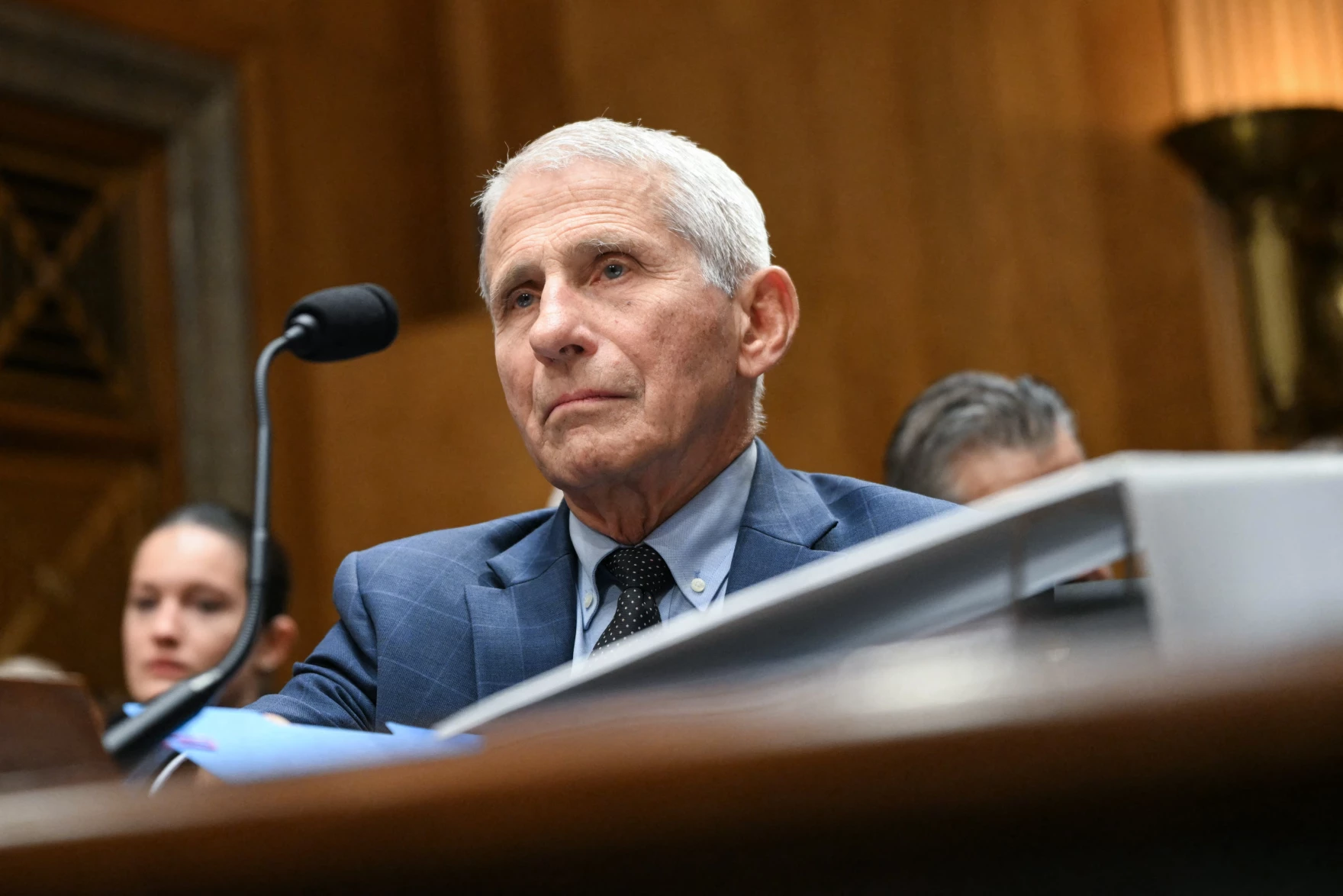
This paper examines newly released documents from Anthony Fauci's pandemic diary and private Slack communications among authors of "The Proximal Origin of SARS-CoV-2" to assess transparency and accountability issues during the COVID-19 response. The records reveal that leading scientists initially considered a research-related origin plausible, continued privately debating laboratory mechanisms after publication, and that officials with institutional interests helped shape analyses presented publicly as independent scientific judgment. While these documents do not prove SARS-CoV-2 was engineered or escaped from a laboratory, they demonstrate a significant gap between private uncertainty and public confidence.
The significance extends beyond COVID-19's unresolved origin to the proposed WHO Pandemic Agreement, adopted in May 2025 but not yet open for signature pending completion of its Pathogen Access and Benefit Sharing annex. The Agreement seeks closer international coordination in surveillance, pathogen sharing, research, regulation, and communication. However, its accountability mechanisms—described as "facilitative," "cooperative," "non-adversarial" and "non-punitive"—are too weak to investigate concealment by powerful states or institutions. The paper argues that authority should expand only when accountability expands with it, proposing reforms including independent pandemic inspectorates, pre-agreed access protocols, transparent research registries, protected whistleblowers, and automatic post-pandemic inquiries.
Key Findings
- Fauci's contemporaneous notes show senior scientists discussed unusual viral features, possible deliberate insertion, accidental release, and coronavirus research at the Wuhan Institute of Virology in early February 2020
- Slack messages reveal Proximal Origin authors continued debating laboratory mechanisms and assigned 10-30% probability to laboratory origin even after their paper was published and widely cited as excluding such possibilities
- Officials who had institutional interests in research funding helped convene, follow, and later invoke scientific analyses that were presented publicly as independent judgments
- Fauci's diary demonstrates he exercised substantial influence over school closures and other restrictions through persuasion and reputation, contradicting later claims of having no role in such decisions
- The WHO Pandemic Agreement's accountability machinery is expressly "non-adversarial" and "non-punitive," making it poorly designed for investigating concealment by powerful states or institutions
- Media coverage often shifted focus from institutional accountability questions to political personalities, with some outlets framing scrutiny as partisan attacks rather than examining documentary evidence
- The indictment of David Morens for allegedly evading FOIA requests and concealing records demonstrates that record preservation failures can undermine pandemic accountability regardless of criminal case outcomes
Recommendations
Establish an independent pandemic inspectorate with protected budget, multidisciplinary staff, and authority to investigate all origin hypotheses including natural spillover, laboratory accident, research-related adaptation, and deliberate release
Require pre-agreed obligations for participating states to preserve and provide laboratory records, sequence databases, sample inventories, incident reports, personnel health information, grant records, and subcontracting chains
Create transparent public registries of high-risk pathogen research before funding or commencement, identifying funders, institutions, investigators, foreign partners, subcontractors, objectives, biosafety levels, and scope changes
Implement stronger conflict-of-interest rules for expert panels, requiring disclosure of grants, institutional relationships, collaborations, advisory roles, and public positions that affect leadership roles, voting, and public presentation
Preserve and publish scientific disagreement in emergency assessments, including competing hypotheses, confidence levels, principal evidence, missing evidence, minority views, and explanations for changed judgments
Establish durable record-preservation requirements for official business conducted through any channel, protect whistleblowers across borders and institutions, and impose consequences for record destruction
Create automatic independent post-pandemic inquiries examining origin, surveillance, scientific advice, conflicts, procurement, regulatory decisions, communication, rights restrictions, and harm distribution
Ensure the PABS annex provides traceability beyond sample transfers to reconstruct pathogen movement, access, experiments, modifications, and incidents throughout the research process